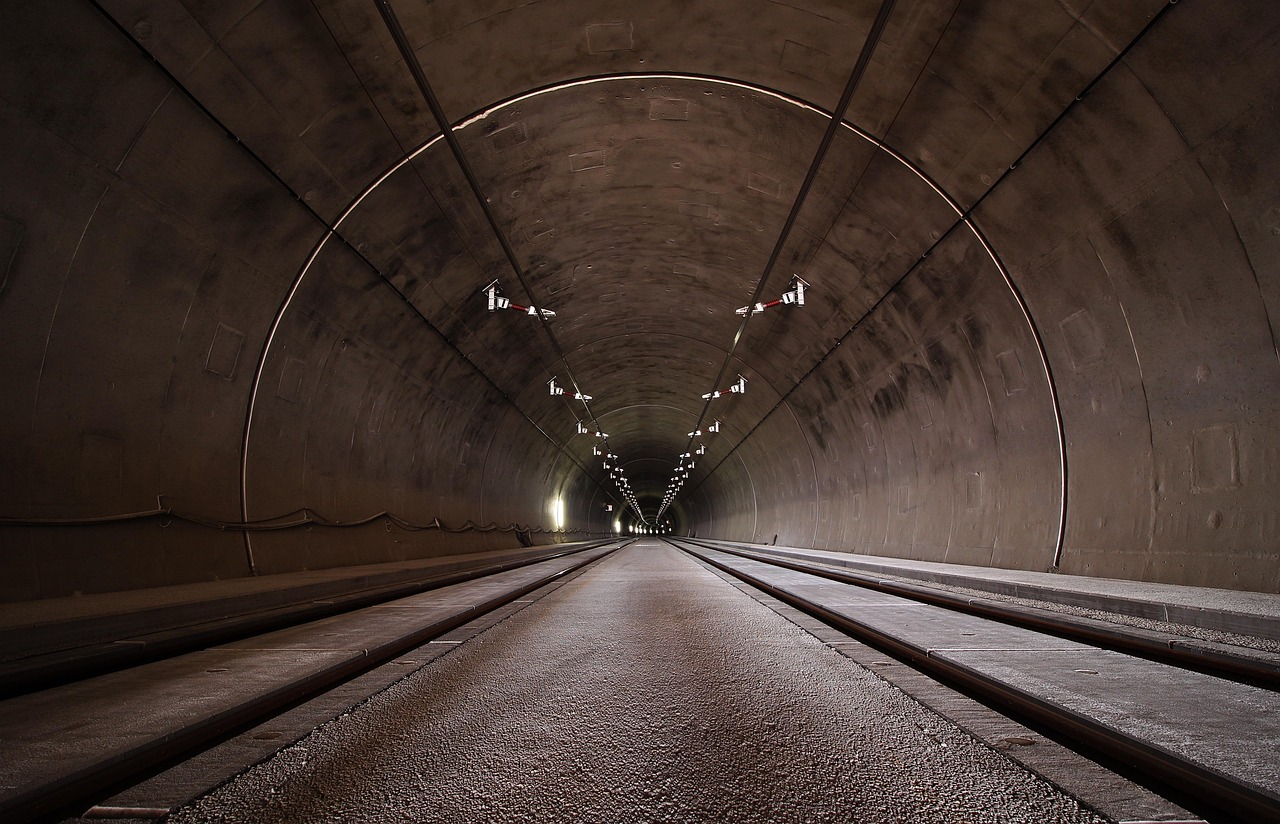
There are two things that make me really nervous on my cycle touring trips: dogs and tunnels. Here are a few tips about how to safely navigate the latter.
Why tunnels are evil
Tunnels scare me because:
- They are often unlit (and if they are lit, it’s a gloomy half-light) so I am much less visible.
- Vehicle drivers are suddenly plunged from bright daylight into gloom, so they are busy trying to get their eyes to adapt rather than looking out for bikes.
- There doesn’t tend to be much room for bikes, so cars and lorries have to make an active effort to avoid you. In a tunnel busy with two-way traffic, they will often squeeze past you, pushing you into the gutter.
- There is often gravel, or even quite large rocks, on the road surface where bits of tunnel roof have collapsed, sufficient to damage a tyre.
- The noises are horrific – the echoing boom of a large lorry approaching from behind you can be heard from hundreds of metres away, and you don’t know if it’s going to flatten you.
Another practical snag with cycle touring is that some tunnels do not allow bike traffic at all for safety reasons, and you may not discover this until you’ve cycled miles to get to the tunnel entrance.
In my experience, such tunnels do usually signpost alternatives – either an alternative winding route up a mountainside, or an escort. For example, one of the long road tunnels on the west coast of Portugal was decorated with lots of no-cycling signs. We had to wave at a CCTV camera near the tunnel entrance, and after a few minutes an official pick-up truck emerged, the driver loaded our bikes on the back and then drove us through.
Avoiding tunnels
Until you’ve experienced a long ascent through a narrow, busy tunnel you may not appreciate how grim they are. Here are my top tips for avoiding them…
- Avoid them – pick routes that lack tunnels. Seriously! However, if you’re cycling in a mountainous area (like Norway or Switzerland, who love their tunnels) this simply isn’t possible.
- Look for alternatives – for mountain tunnels, you can sometimes find the ‘old road’ which was built pre-tunnel, which takes a more circuitous route and drops you back on the main road. Google Maps satellite images are good for spotting these!
- If there is really no alternative, consider waving down a pick-up truck or lorry and hitching your bike through.
Tips for cycling tunnels safely
If you can’t avoid cycling them, then consider the following:
- You must have lights, big bright flashing ones. As many as possible. And reflectors – I use touring tyres that have a reflective strip round them, and my panniers have reflectors on them. They all help keep you visible.
- A front light is often essential in a dark tunnel, to help you avoid gravel, big rocks and drainage holes.
- Take off your dark cycling glasses before you go in, otherwise you’ll be blind.
- If there is any sort of pavement then consider using it, even if it means getting off and pushing.
- The point that you are at highest risk of getting hit by a car is just as you enter the shadow of the tunnel. If a driver didn’t see you go in, they will enter the gloom at speed, be blinded for a second or two as their eyes adapt, and then…. Splat. I therefore either wait for a break in the traffic, to give me a clear run, or make sure that the traffic behind me has spotted me before I enter the tunnel.
- Consider whether it is safer to dominate the road. By this I mean deliberately cycling further away from the road-edge than you normally would, so that you are more visible. Crucially, this also forces following traffic to overtake you properly rather than squeezing past. I’d rather have a pissed-off lorry driver honking his horn behind me, as he follows me at 10mph through a tunnel, than have him pushing past and forcing me into the gutter.
Tunnels in Norway
There are so many road tunnels in Norway that cycletourer.co.uk have published a detailed map – I’d highly recommend consulting this if you’re heading there.
Parting thought
If you are a driver following a bike into a road tunnel, then consider just staying behind them and following them slowly, holding up the traffic, until they are safely out. They will love you for it!