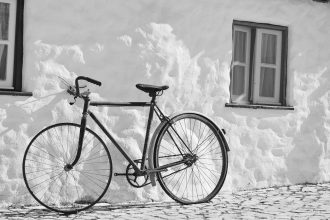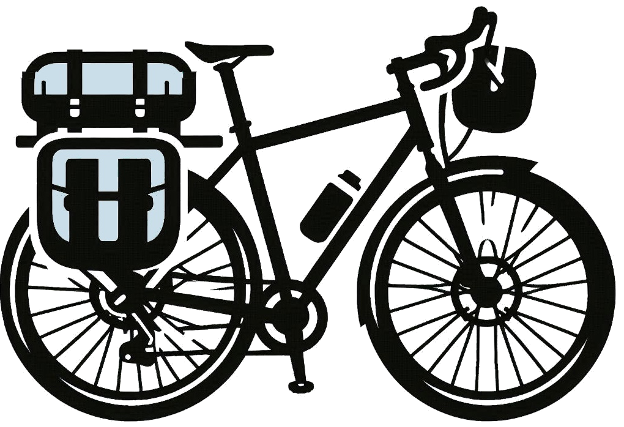
This is inevitably going to be a controversial topic as cyclists (including us!) have strong ideas and pre-conceptions about what kind of bike is appropriate for touring trips.
The main message is that you don’t need an expensive purpose-built touring bike for touring. Yes, they may be more robust, but there are also loads of options that won’t make your wallet ache.
What we use
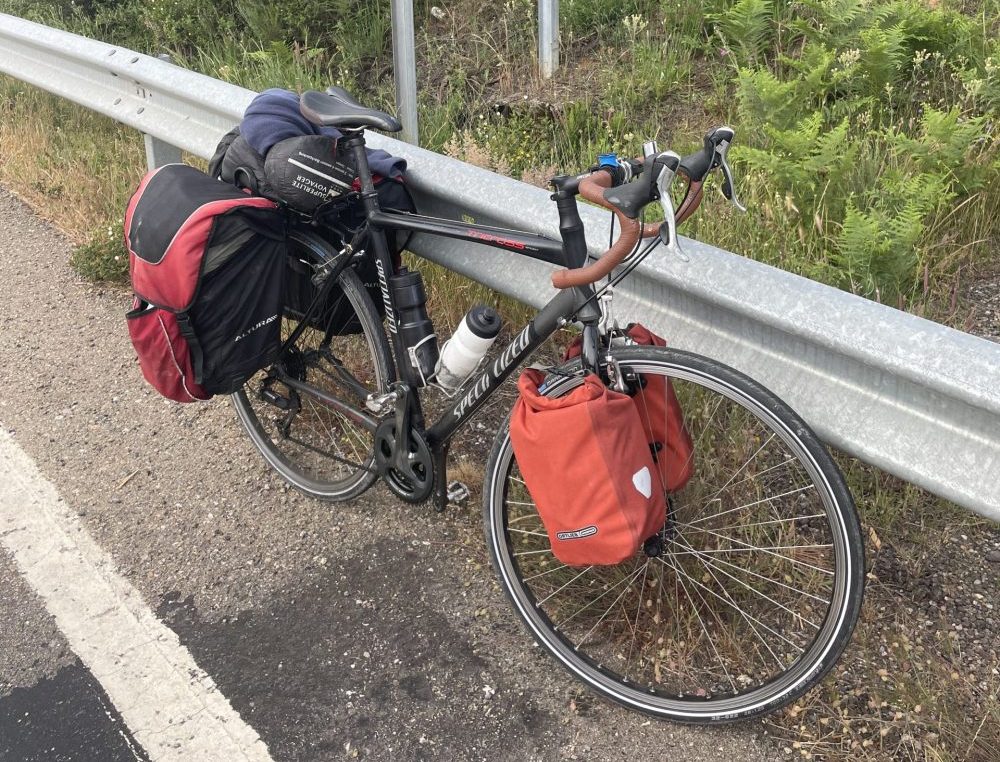
Over a decade ago I bought a secondhand 2009 Specialized Tricross for about £250 for touring and it’s been awesome, brilliant and I love it. In case you didn’t know (and I didn’t!) the Tricross is aluminium and is designed for cyclocross, which is basically road-biking but off-road. It is therefore built to be tougher than a road-bike, and has clearance for wider wheels.
There are several other things I like about it:
- It’s got a triple chain-ring, which means lots of options and a good granny-gear for climbing steep hills with heavy panniers on the back.
- It’s got drop-handlebars, which personally I think are vital for touring – when you spend long days on the bike, you really come to appreciate having several different options for how to position your aching hands.
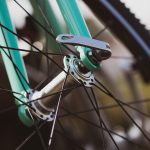
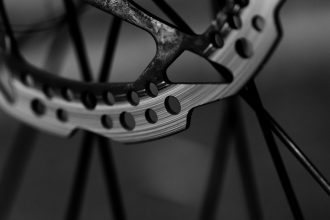
- It’s got calliper brakes, which is a definite advantage over disc-brakes, since discs can easily get knocked and bent when touring, which can cause you a headache.
However, my brother has different preferences – he uses a Trek aluminium gravel bike, which is lighter than the Tricross, but probably slightly tougher. He prefers the stopping power of disc-brakes, but therefore usually carries a spare disc with him in case one gets knocked.
Pros and cons of other types of bike for touring
Road bikes
When we first started touring, we both used low-range aluminium road-bikes (~£600) as that’s all we had. We added a frame on the back, but that was pretty much the only change from the spec.
Many people will suck through their teeth and tell you that touring on road-bikes is a disaster – don’t listen to them! We had some happy trips on these. As long as they have pannier attachment points, then give it a go if that’s all you have available.
However, it’s also worth understanding the disadvantages. Cheap aluminium road-bikes are not very tough, and (as we did) therefore are not ideal if overloaded and/or ridden on bumpy road-surfaces. The wheels in particular are just not made for this, so take some spare spokes and know how to fit them!
Our experience
In 2015 we did a quick tour down the coast of Portugal, from Porto down to the Algarve, using our old road-bikes. Naïve youngbloods that we were, my brother’s bike had cheap, lightweight (but snazzy-looking!) 12-spoke 700x23C wheels on it.
Somewhat inevitably, one of the spokes ripped out of the rim halfway through the trip and we had to divert to a nearby Decathlon to buy a new wheel. The replacement was still cheap and crap, but at least was circular!
Mountain bikes
Mountain bikes are robust and ideal for touring, if they have pannier attachment points. You can pick up an old steel-framed mountain bike for next to nothing, that will go on forever. However, I choose not to use one as they are slow, heavy and don’t have drop handlebars – I prefer being on something that has a much more ‘road bike’ feel to it.
Touring bikes
I don’t do enough touring to justify a purpose-built touring bike. Yes, they’re rock solid and will carry you safely over a 2000 mile trail if you need them to, but for shorter trips they are overkill, will slow you down and hurt your wallet.
Carbon
I wouldn’t consider touring on a carbon bike – they’re too easy to damage and too hard to repair, e.g. if they get smacked whilst in transit on a plane. Stick to aluminium or steel.